

Red Flags In Plain Sight
On MAFS, misogyny and what TV taught my daughter about the bare minimum.

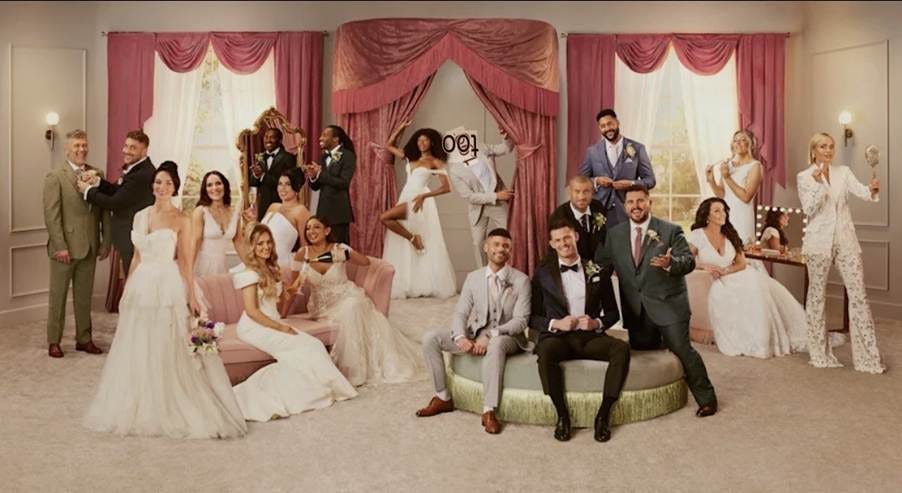
It Is not often that TV does the job of parenting for you, or that you should let it. But over the past couple of years, I have been sat with my mid-teen daughter allowing her to glimpse inside the perilous and often volatile world of relationships and the abusive treatment of women in plain sight. She has learned the hard way. Not by making her own painful mistakes. But by watching the egregious treatment of women of E4’s TV dating show Married at First Sight (MAFS).
Married at First Sight (commissioned by Channel Four from CPL productions) first came to our screen in the UK in 2015. I remember it vaguely. Six people, average Joes and Josephines, not searching for insta clout or brand deals. Instead, quietly and not at all confidently searching for love.
The premise of the show (for anyone who has not watched it or does not have teens that talk about it constantly) is that a group of ‘experts’ match single people according to their values, beliefs, goals and personality. A kind of ‘Blind Date’ on steroids as the first date (and in fact the first time the couple actually meet) is at their own wedding.
The original programme had more of a documentary feel than a reality TV one and did its best to lean into the more psychological and sociological factors of meeting ‘the one’. You probably don’t remember the participants. They were quite ordinary. A bit middle England. A bit pedestrian, as was the show.
But the programme did not stay that way. In the 2010s, reality TV was making its way into our screens in a big way and making money in a hugely lucrative way for any channel that could milk that particular cash cow.
So, in 2021 the format of MAFS changed. MAFS got ‘realitified’, morphing from a programme to a ‘show’. The contestants became more glamorous, sometimes scouted from other TV shows and often already with an established social media base.
The show changed too - more couples, bigger weddings, flashier ‘honeymoons’, more anxiety provoking post wedding ‘tasks’, more contrived conflict, more drama and suspense, all building to the final ‘commitment ceremony’ – another mock wedding where the ‘couple’ decide if they will pursue the relationship once the MAFS bubble has burst and the participants go back to real life.
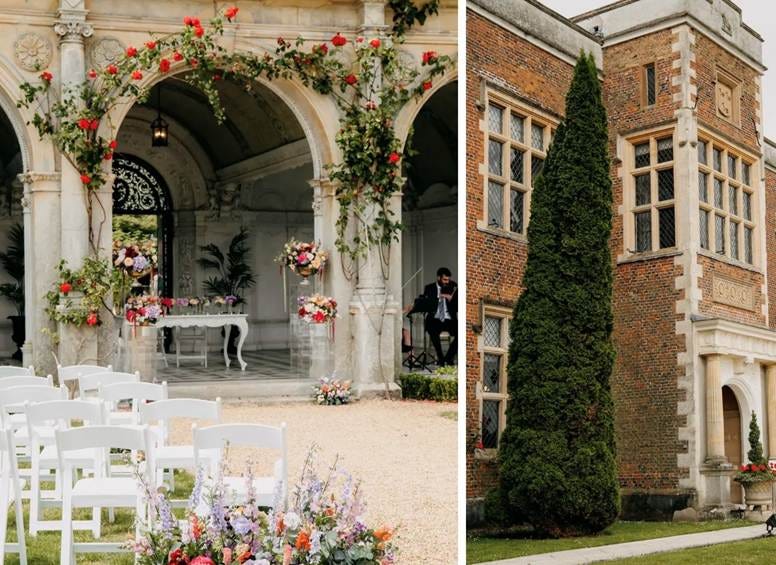
One of the actual recent MAFS UK wedding venues – no expense spared.
The ‘experiment’ as the experts and the contestants constantly refer to, began to rely less on the gathering of empirical evidence and more on the harvesting of manufactured drama, staged betrayal, uncomfortable bullying, hurtful lies and vicious conflict.
Each week the ‘couples’ were able to discuss their marital woes, on the couch, in front of the whole cast, overseen by three experts. Each heavily edited episode leaving the viewer on a cliff hanger, often at the participant’s expense.
So why did I watch? Why did I let my daughter watch?
My daughter, Imogen started watching MAFS UK and MAFS Australia, when she was 15. She was going to do it anyway and I would rather she do it with me. Like her first underage swig from a cider bottle, you can’t stop these things, sometimes you just have to watch them happen. So that’s what we did, watch the episodes together, let the stories play out for themselves.
The lessons came thick and fast; the unnecessary repulsion caused by the token ‘fat’ girl, the guys that said one thing whilst clearly (and on camera) doing another, the participants who stayed until the end, void of any real affection for their partners but aware more screen hours mean more social media followers, the lack of ‘girl code’ (egged on by ratings-hungry producers), the sexual bragging (I suspect by those who were doing it the least). It was an education far beyond anything I could have provided for my daughter.
In an episode of MAFS Australia (think tanned athletic looking model-like types, endless shots of participants doing ‘fitness’, sweeping beach scenes and constant references to ‘mate’ and ‘babe’), one guy was accused of flirting with another female contestant. He denied it. I am a 52-year-old woman of the world. He was lying through his teeth. I asked my daughter if she thought he was lying.
‘Totally’, she replied
‘He is an idiot’.
My work was done.
But MAFS is strangely addictive (so is crack cocaine, doesn’t mean it’s good for you). As we watched the 2025 series of MAFS UK, I found myself becoming increasingly uneasy. What was becoming obvious was the insidious and alarming lack of safeguarding around the female participants in the show and the subtle and not so subtle ways the women were encouraged to accept as normal, what I would consider, concerning behaviours and attitudes.
The first clue is in the title - Married at First Sight. Oh yes marriage, the bastion of protection and safety for women. Being trapped in a residence with a man, cut off from the world, shackled by wedlock, named as wife. Even when women chose their partners, this is far from recipe for success, but with a complete stranger, there surely needs to be strong safeguards in place?
But there wasn’t. Often on the ‘honeymoon’, the couple are given a one-bedroom apartment. The message is clear ‘You are husband and wife now’. No, they are bloody not and even if they were, it is not up to some production crew to decide if the woman has access to her own sleeping space.
Back in the UK, couples are expected to live together, in a ‘bubble’ in an apartment, separated from family and friends and again with only one bed unless they request otherwise. Would you want that for your daughter?
One female contestant complained because her ‘husband’ i.e. the guy she had known for a couple of weeks, objected to his ‘wife’ locking the bathroom door. More red flags than a Moscow State Parade. Why were men like this not vetted and excluded from the process in the beginning?
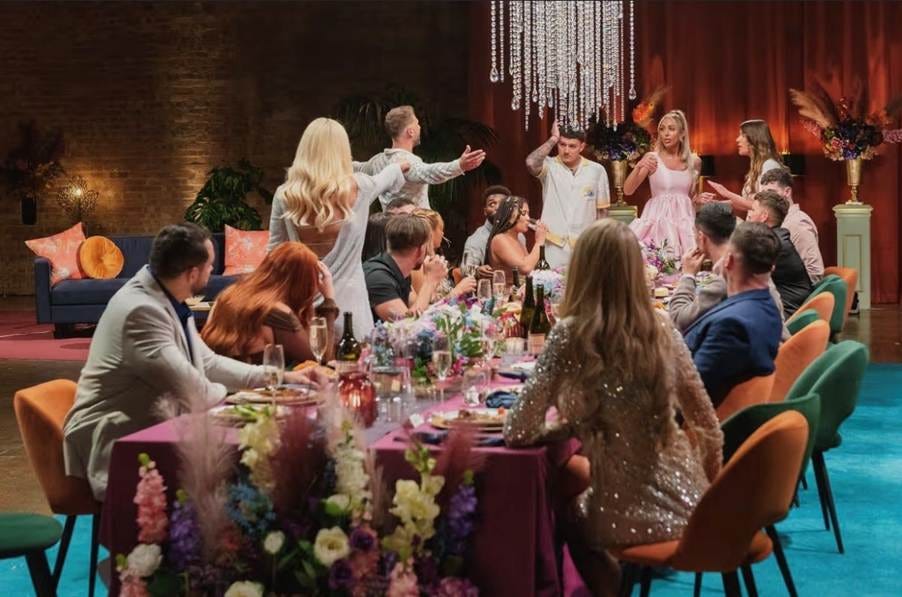
Drama pays, but the costs are high for some. MAFS UK 2025.
The most alarming part of the show for me was that once one part of the couple expressed that they wanted to leave, they were told that they could only leave if both participants agree and that they would have to stay another week to see if they could work out their differences. This is not the message to give to the scores of teenage girls watching the show. Nobody needs permission to leave their relationship. Period.
Watching the couples on the couch, overseen by relationship ‘experts’, I found myself becoming aghast at the amount of misogyny, coercive controlling behaviour, gaslighting and covert, sometimes overt threat shown by some male participants. On camera. In front of an audience of millions. What the hell are these guys doing behind closed doors?
Countless times I would look at my daughter and ask, ‘
What kind of man do you want to share your life with?’
She knew the answer,
‘not one like that’,
she would always reply.
And yes, yes not all men etc. Some were kind, respectful and boundaried but I am not lauding that. That is the bare minimum, not cause for celebration.
The bare minimum. How easy it is for us all to lose sight of what the bare minimum is when it comes to the treatment of women in relationships and how easy it is to slip into the blame game of ‘perhaps you were not communicating to him’ (a favourite line of relationship therapists everywhere), like men are unable to think for themselves, need guidance at every point and are not aware of the basics of human decency, integrity and respect.
This sorry saga continues in an even more shocking, but not totally unexpected way. Earlier this week, two female participants alleged they had been raped by their ‘husbands’ whilst participating on the show and another woman, Shona Manderson has gone on record to make an allegation of sexual assault by her ‘husband’ during her time on the show. Shona and the other two women have given interviews to BBC 1 Panaroma programme but only Shona has shared her identity.
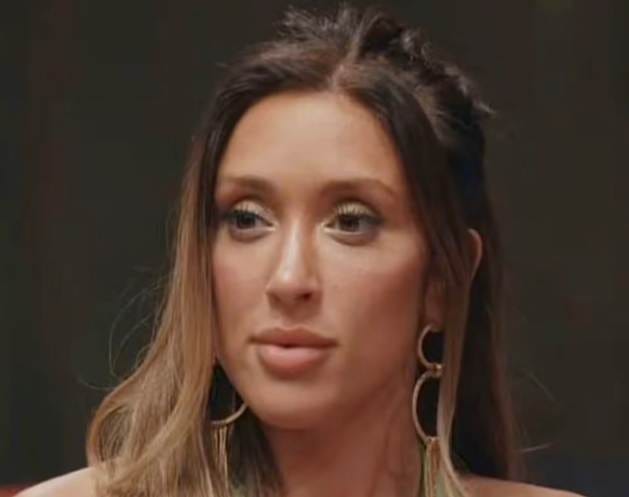
Shona Manderson
Lawyers for the accused men have denied any wrongdoing and Channel 4 has commissioned an external review.
But the fact remains, regardless of the outcome of any review or potential legal proceedings, I have seen with my own eyes, with my daughter’s eyes, how some men feel entitled to act whilst in a relationship. In plain sight. No amount of ‘communication’ or ‘giving it another week’ will change that.
We have also seen how the safety of women has been compromised and conflated with ratings and revenue rather than protection and wellbeing. Women always come off worse in reality TV. In life. Always encouraged to give more to receive less and to fight for the rights that should be intrinsically ours. We deserve better.
MAFS has been an education, a better and more timely education than I could have given my teenage daughter. The show may go on but I think we can all learn so much from it already.
Over to you. Do you watch MAFS? Do you think women suffer at the hands of reality TV? How do you try to teach your daughter’s not to accept the bare minimum? Feel free to comment and join in the discussion - the more we talk, the stronger we become.
Please consider restacking/liking this post to reach more women who would benefit from it. If you can I would really appreciate a coffee. Writing is my fulltime and only income now and I appreciate every penny - I have to put my daughters through university and away from the likes of MAFS!
I am once again struck nearly dumb by the things that happen to women without proper challenge, let alone prevention. Watching it with your daughter feels like the right instinct.
One question keeps nagging at me though, beyond the disgust at what happened to these women.
Which room are we in?
Because somewhere there's a commissioning meeting where this format gets renewed despite containing a clause that literally prevents participants leaving if they wish to. That's not just a safeguarding failure—it's in a contract, a contract that came before any of this debate.
You’ve talked here eloquently in the room where the harm happens. I keep finding myself wanting to know who built the room, and why Channel 4's first public response—from a woman—was about "uncorroborated and contested claims."
Where does that leave our boys, watching the same screen?
I've been writing about exactly this—the silence of decent men, and what we might actually do about the culture we've complacently and complicitly joined.
[Essay “Changing Channels” out Sunday if it's of interest. #TheSilentManority]
Absolutely shocked at the treatment of young women on this television programme, put at grave risk by a complete lack of safeguarding. How on earth do the ‘experts’ on the show think they can judge how individual people will react in these circumstances ? Then compounded by participants being unable to leave at any time of their own free will. Unbelievable. How did this get past commissioning and lawyers ? Excellent piece, Rebecca, and very enlightening for those of us not familiar with a programme that puts women at risk for public entertainment and financial gain.